The Listener
Aurélien Buiron on listening to silence and giving glaciers a voice.
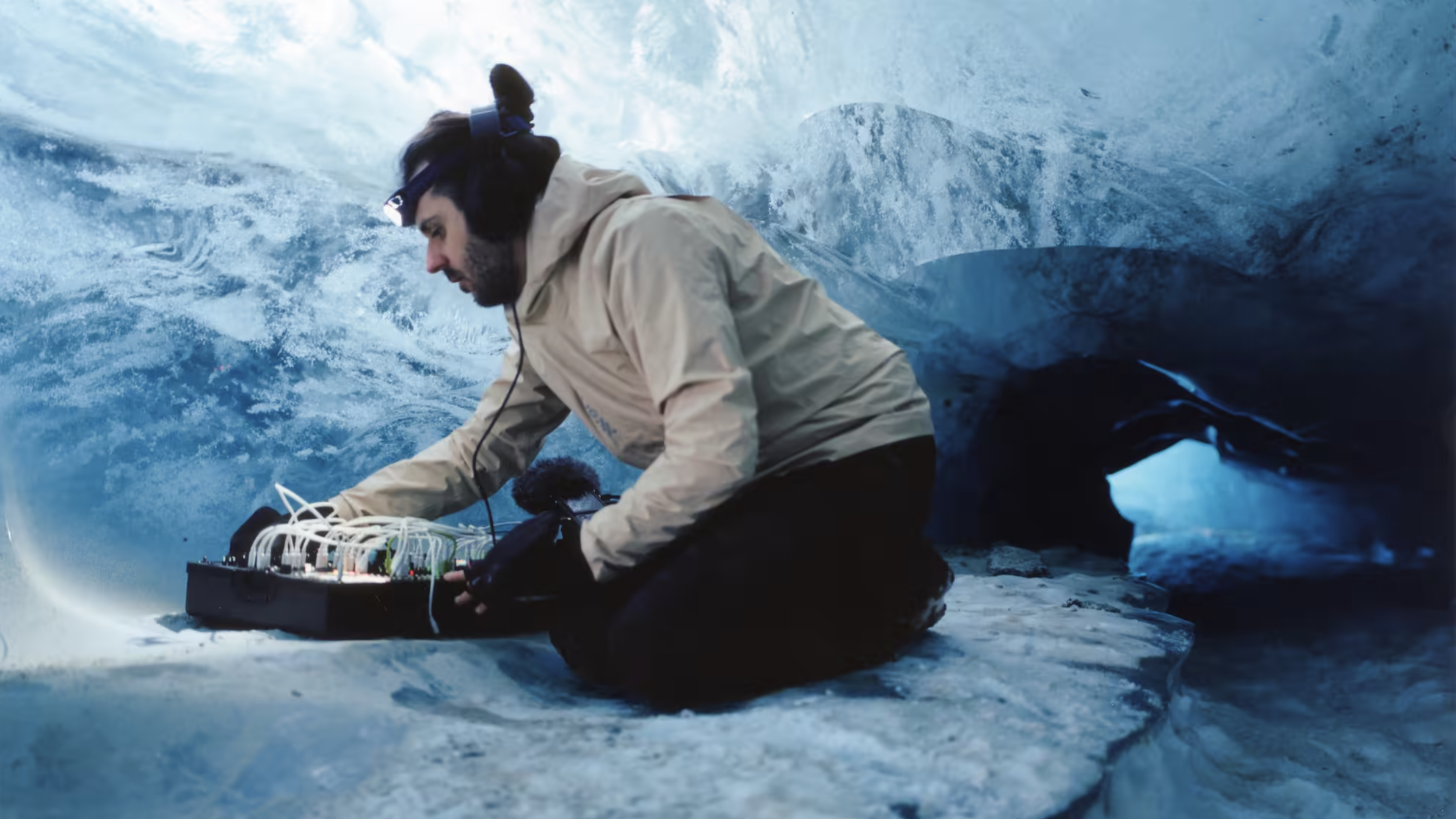
Aurélien Buiron, known as Ghost in the Loop, is a sound artist from the French Alps. He studied at the music conservatory, but it wasn’t until he truly started listening that he found his best improvisation partner, in the natural world.
Aurélien, you studied at the music conservatory. How does that help the work you do now?
At the conservatory, I learned structure, harmony, rhythm. I learned to improvise with other musicians. Now I apply the same principles, but with nature. I always say glaciers are my improvisation partners.
What does that actually mean in practice?
Sometimes the glacier takes control and I become the director. Sometimes I take the lead. I adapt to the environment and what it gives me.
Do glaciers sound different from one another?
Yes, absolutely. Each glacier has its own sonic signature. It depends on the topography, the water, the velocity. Some are very stable. Some are falling apart. When that’s the case, you hear it.
What do you hear?
Them, cracking, moving, screaming. They sound almost human sometimes. The faster they’re melting, the louder they get. So when the sound is incredible, the meaning is terrible.
Tell me about the first glacier you ever recorded.
It was the Zinal glacier in Switzerland, not very far from where I live. Also my first time inside a glacier. It was very impressive because it’s huge, like being inside a very old giant. But you can also feel its fragility, because it’s collapsing.
Is that where their beauty lies? In their fragility?
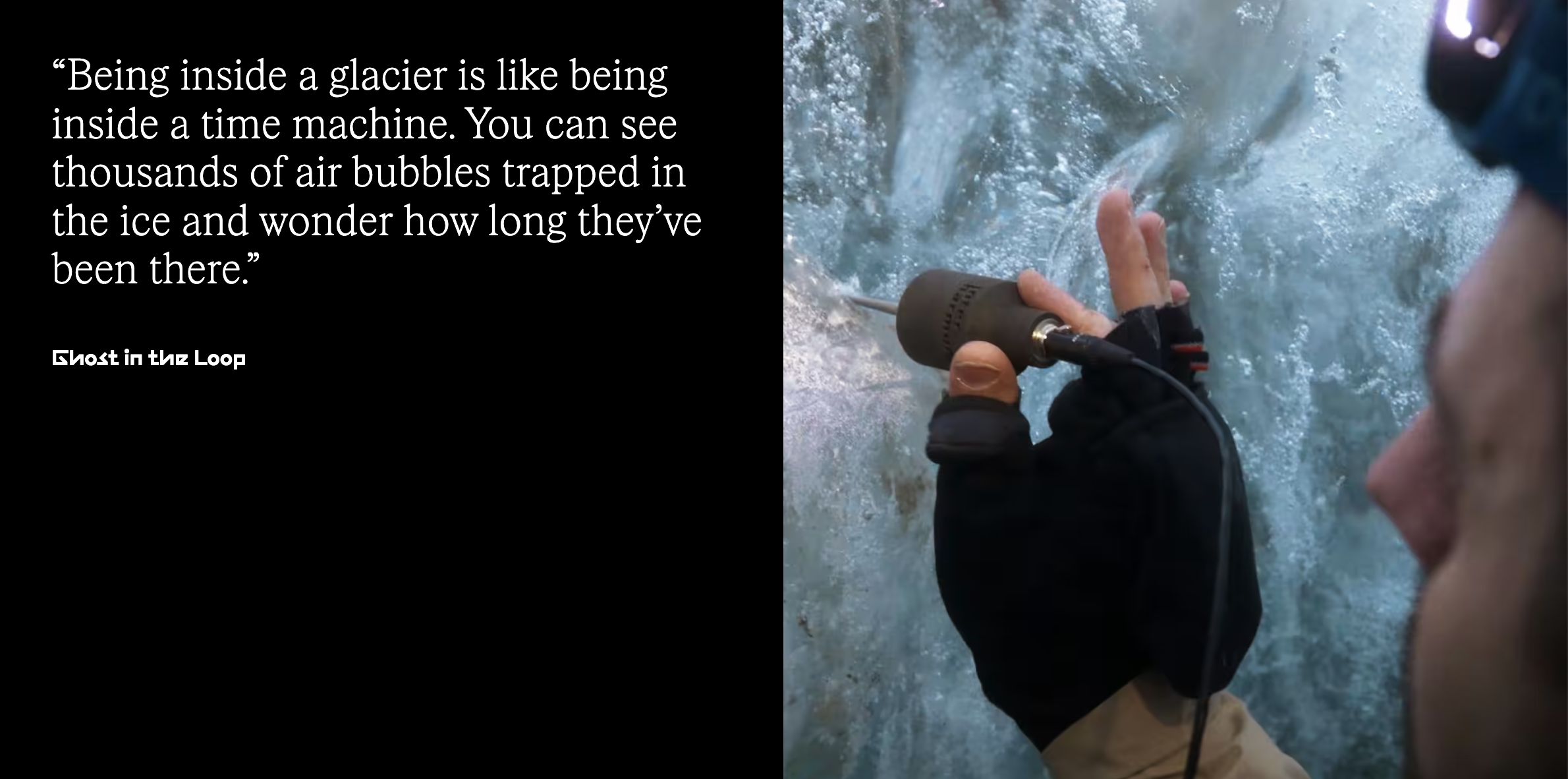
Yes, in the fragility, but also in the fact that they were here so long before me. You can see thousands of air bubbles trapped in the ice and wonder how long they’ve been there. Centuries? What kind of atmosphere they come from. Sometimes you can even see small insects trapped in there. Maybe they’ve been there for, what… 100, 200, 1,000 years?
It's like being inside a time machine.
A disappearing time machine…
Yes, fragments of memory that break apart, then drift on the lake.
You’re witnessing a memory that is disappearing and transforming, eventually turning into ocean. And there’s nothing you can do but listen.
Has your work changed the way you listen?
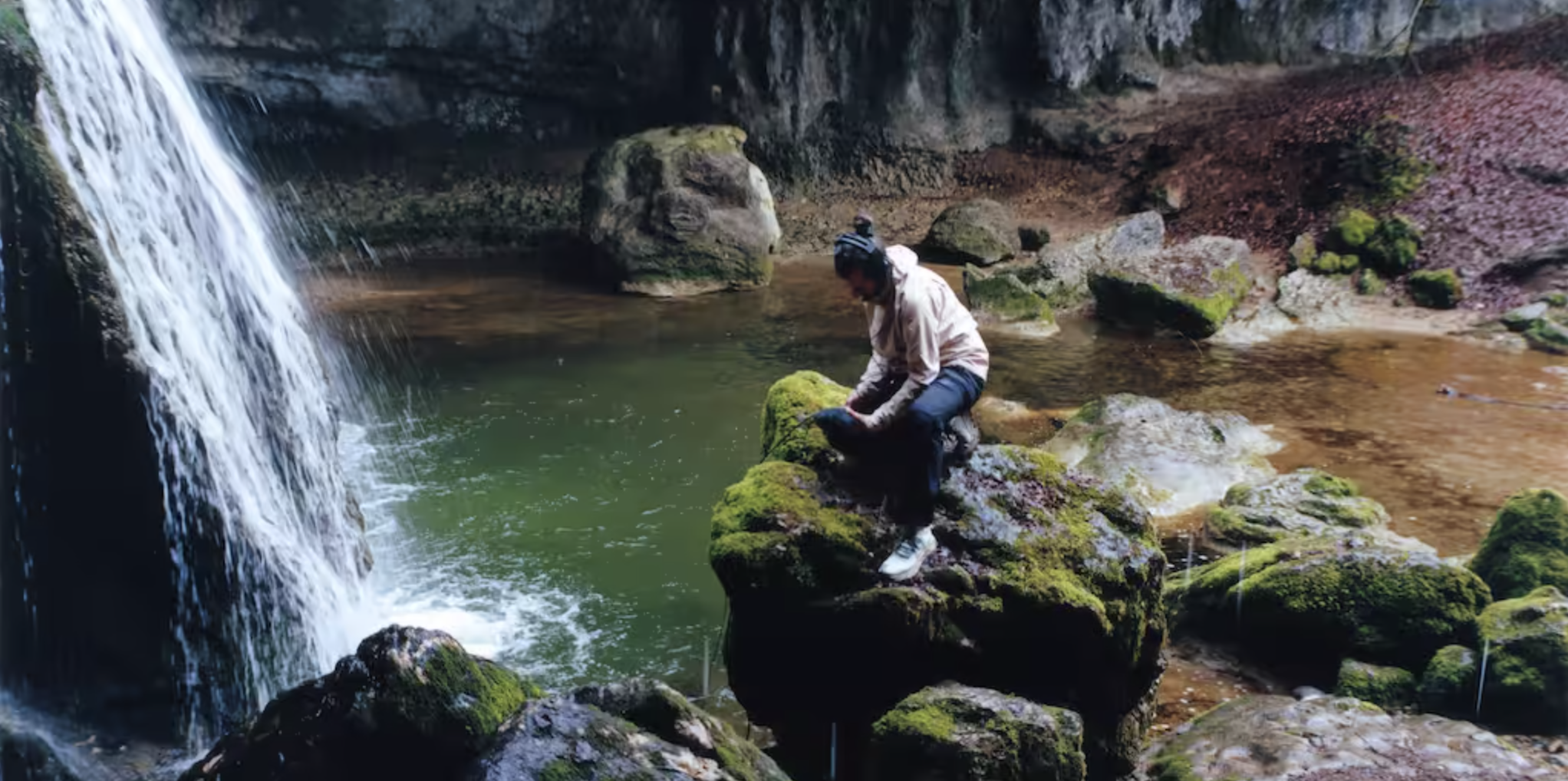
Completely. Since starting this project, I’ve begun to hear all these sounds again. Birds. Wind in the trees. Small resonances. I don’t go into nature with headphones anymore.
What about listening to silence?
It’s funny. I had this discussion with a friend recently. What is silence? Does silence really exist? Where does it start and where does it stop? Where does music start?
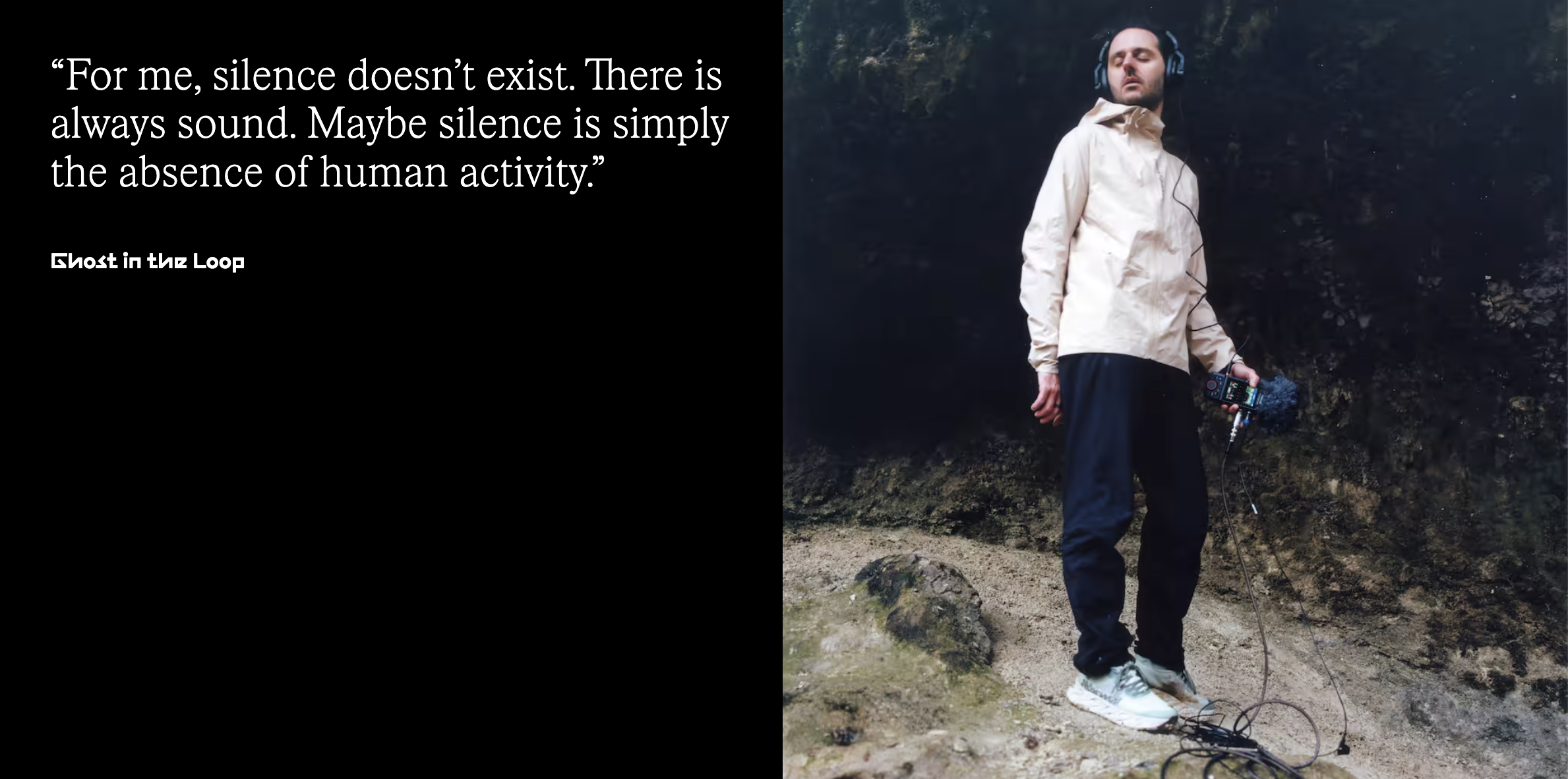
For me, silence doesn’t exist. There is always sound. Maybe silence is simply the absence of human activity. And if that’s the definition, then silence is a reconnection to where we come from.
Where do we come from?
From nature. In human history, we’ve spent far more time in nature than in big cities. We’re losing that connection. To nature, and to “silence”.
Why is it important to reconnect?
In big cities, you move with the flow of everyone else. It can be great, but it also feels like a big ant colony. In nature, you still move with the flow, but differently. You have more space to go at your own rhythm. To be yourself.
What is something nature has taught you?
That every tiny thing is part of a bigger picture. We have to care for even the smallest and most seemingly insignificant things. If one of these elements collapses, everything else can collapse.
Like with glaciers. What can you do, really?
You can’t do anything. All you can do is witness these sounds disappearing in front of you. Record them. Share them with the world ■